
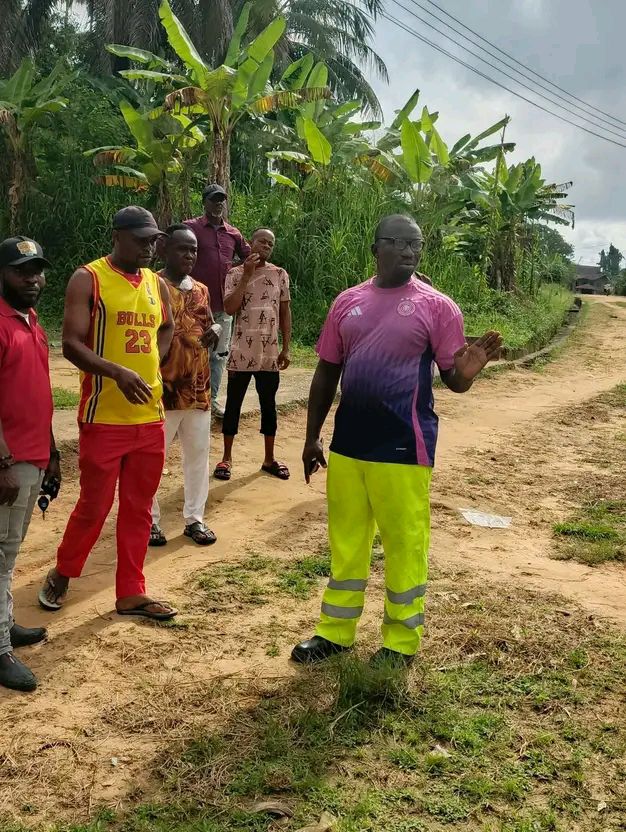
When you drive past a freshly mowed roadside or a well-maintained public space, the finished landscape is what you see.
What you don’t see is the operation behind it.
Statewide environmental maintenance is a coordinated system involving people, equipment, logistics, safety, waste collection, and supervision.
At Sebastino Environmental Services, our work supporting environmental maintenance across Cross River State has given us firsthand experience of what it takes to keep large public spaces clean, green, and presentable.
It Starts With Deployment
Large-scale maintenance begins with getting the right people, equipment, and materials to the right locations.
Field teams are deployed with handheld grass-cutting machines and string trimmers, rakes, refuse bags, personal protective equipment, machetes, and other essential tools.
Every team must be properly equipped before the work begins.
Then Comes the Cut
Grass cutting is one of the most visible parts of the operation—but it is only one stage.
Teams work systematically along roadsides, verges, medians, public spaces, and other assigned areas, controlling overgrown vegetation and restoring a neat, accessible appearance.
Attention to detail matters, particularly around edges, corners, walkways, and difficult-to-reach areas.
From Cut Grass to Collected Waste
A completed mowing operation leaves behind grass, leaves, branches, and other debris.
These must be raked, gathered, bagged, collected, and removed.
This is where environmental maintenance becomes a logistics operation. Collection teams follow behind field operations to ensure that waste generated during maintenance does not become another environmental problem.
Evacuation Completes the Cycle
Collected waste must be transported and evacuated responsibly using appropriate disposal trucks.
A public space is not truly maintained if piles of cut vegetation and refuse are simply left behind.
Mow. Rake. Bag. Collect. Evacuate. Maintain.
Every stage contributes to the final result.
Safety Is Part of the Process
Working along roads and public spaces requires constant attention to safety.
Personal protective equipment, proper equipment handling, team coordination, and awareness of pedestrians, motorists, infrastructure, and surrounding conditions are integral to the operation.
Good environmental maintenance is not simply about getting the job done. It is about getting it done responsibly.
The People Behind the Operation
Machines improve efficiency, but people make the operation possible.
Field workers, equipment operators, supervisors, logistics personnel, and support teams must work together to deliver results across multiple locations.
That coordination transforms individual grass-cutting assignments into a functioning environmental maintenance system.
More Than Grass Cutting
Statewide environmental maintenance is ultimately a continuous cycle of care:
Deploy → Cut → Trim → Rake → Bag → Collect → Evacuate → Inspect → Maintain.
Behind every clean roadside and well-maintained public space is an operation designed to make it possible.
At Sebastino Environmental Services, we are proud to bring together the people, equipment, experience, and operational discipline required to support a cleaner, greener, and better-maintained Cross River State.